Signs Your Garage Door Spring Is Failing (and What to Do)
Garage door springs don't usually fail without warning — here's how to catch the signs before they leave you stranded.
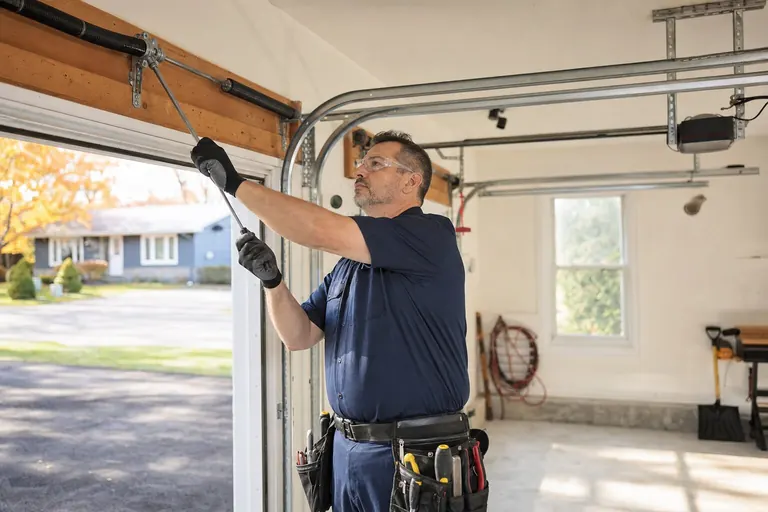
Introduction
If you've lived in Ottawa through even one winter, you know how hard our homes' mechanical systems have to work. Garage door springs are no exception. These heavy-duty torsion or extension springs carry almost the entire weight of your door — often well over a hundred pounds of wood, steel, or insulated panel — and they do it every single time you open and close the door, sometimes multiple times a day.
Cold weather is brutal on metal springs. As temperatures drop across neighborhoods like Barrhaven, Orléans, and Kanata, steel contracts and becomes more brittle, and the lubricant that keeps springs coiling smoothly can thicken or dry out. This means a spring that was merely worn in October might snap in January. Knowing the warning signs can mean the difference between a scheduled repair and a Saturday morning emergency call.
In this guide, we'll walk through the most common symptoms of a failing garage door spring, why Ottawa's climate accelerates the problem, and what steps you should — and shouldn't — take when you suspect trouble.
Common Warning Signs of a Failing Spring
Garage door springs rarely fail instantly. In most cases, they give off clues for days or even weeks beforehand. Here's what to watch for.
The Door Feels Heavier Than Usual
If you operate your garage door manually (say, during a power outage) and it suddenly feels like you're lifting a car instead of a door, that's a major red flag. A healthy spring should let you lift the door with one hand, smoothly and evenly. Increased resistance almost always points to spring fatigue.
Loud Bangs or Popping Sounds
A loud "bang" from the garage — especially one that sounds like a gunshot — is one of the most recognizable signs of a torsion spring breaking. Homeowners in Nepean and Stittsville often describe hearing this sound and finding the door won't budge afterward. If you hear this, do not attempt to open the door.
Visible Gaps or Stretching in the Spring Coils
Take a look at the torsion spring above the door (carefully, and only if the door is closed and the opener is disconnected). A visible gap in the coils, or a spring that looks stretched or twisted unevenly, is a clear sign it's on its way out.
The Door Opens or Closes Unevenly
If one side of the door lags behind the other, or the door looks crooked as it travels, one spring may be weaker than the other — common with two-spring systems where wear happens at different rates.
Slow or Jerky Movement
An opener straining, jerking, or slowing partway through its cycle is often compensating for a spring that's no longer doing its share of the lifting work.
The Door Won't Stay Open
If your garage door creeps back down after you open it manually, the springs have lost tension and can no longer hold the door's weight in place.
Why Ottawa Winters Make Spring Problems Worse
Cold Steel Is Brittle Steel
Torsion and extension springs are made of high-tensile steel, and like most metals, they lose flexibility as temperatures fall. During Ottawa's deep freezes — especially the stretch from December through February — springs that are already fatigued are far more likely to snap under the sudden strain of a cold start.
Ice and Frost Add Extra Weight
Snow buildup on the roof or ice forming along the door's edges and tracks adds unexpected load. A spring calibrated for the door's normal weight may be pushed past its limit when ice is factored in, especially on older doors in areas like Vanier or Gloucester with less insulation.
Thickened Lubricant Increases Strain
Grease and lubricant naturally thicken in cold weather, increasing friction throughout the spring and track system. That extra resistance forces the spring to work harder every single cycle, accelerating wear.
What to Do When You Suspect a Failing Spring
Stop Using the Door Immediately
If you notice any of the signs above, stop operating the garage door — manually or with the opener — until it's inspected. Continuing to use a compromised spring risks a sudden, dangerous failure.
Do Not Attempt a DIY Spring Repair
Garage door springs are under extreme tension. Even experienced DIYers can be seriously injured attempting to adjust or replace them without the right tools and training. This is one repair best left to a professional technician with proper winding bars and safety equipment.
Call for a Professional Inspection
A trained technician can assess both springs (even if only one shows visible damage — the other is usually close behind), check the cables and drums for related wear, and recommend a full replacement if needed.
Frequently Asked Questions
How long do garage door springs typically last?
Most torsion springs are rated for a certain number of open-close cycles, which usually translates to several years of typical residential use — though heavy use, poor lubrication, and harsh winters can shorten that lifespan considerably.
Can one spring fail while the other is fine?
Yes, but if one spring breaks, the other is usually close to the same age and wear level. Most professionals recommend replacing both at the same time to avoid a repeat service call soon after.
Is it safe to drive my car out if a spring just broke?
If the door is already open, you can typically drive out, but avoid trying to close or reopen the door afterward. If the door is closed and won't open, do not force it — call for emergency service.
Can cold weather alone cause a spring to break?
Cold weather doesn't cause spring failure on its own, but it significantly accelerates failure in springs that are already worn, rusted, or reaching the end of their service life.
When to Call a Pro
If you're in Ottawa or the surrounding area and need help with a failing garage door spring, reach out to 613 Garage Door Repair. Call (613) 709-2979 — we're open 7 days a week, 7 AM to 9 PM, with 24/7 emergency service across Ottawa, Kanata, Nepean, Orléans, Barrhaven, and beyond.
Need help with your garage door?
613 Garage Door Repair is open 7 days a week, 7 AM–9 PM, with 24/7 emergency service across Ottawa and the surrounding region. Call (613) 709-2979 for same-day service and a free written estimate.